The iPHARE initiative 5 years in – slowing down, or gaining momentum?
The city of Toronto introduced the Integrated Prevention and Harm Reduction initiative, or iPHARE to combat its ongoing opioid crisis. The city’s data shows that there were 808 non-fatal overdoses in 2020, and 1496 non-fatal overdoses in 2021. It is clear that the COVID-19 pandemic aggravated the opioid crisis, and more homeless individuals were abusing opioids due to the stress. The iPHARE initiative was introduced in December of 2020. However, the data shows that the initiative began showing progress in 2022, when the number of non-fatal overdoses fell to 893 and 796 in 2023, and 555 in 2024. Although the reduction is gradual, it shows that the iPHARE initiative is having some effect on reducing the opioid crisis.
In contrast, the number of fatal overdoses shows promise of reduction. At its height, there were 70 fatal overdoses in 2021 – the highest between the years of 2018–2024. This number was reduced to 55 in 2022, 42 in 2023 and 27 in 2024. There are no total numbers for both fatal and non-fatal overdoses for 2025.
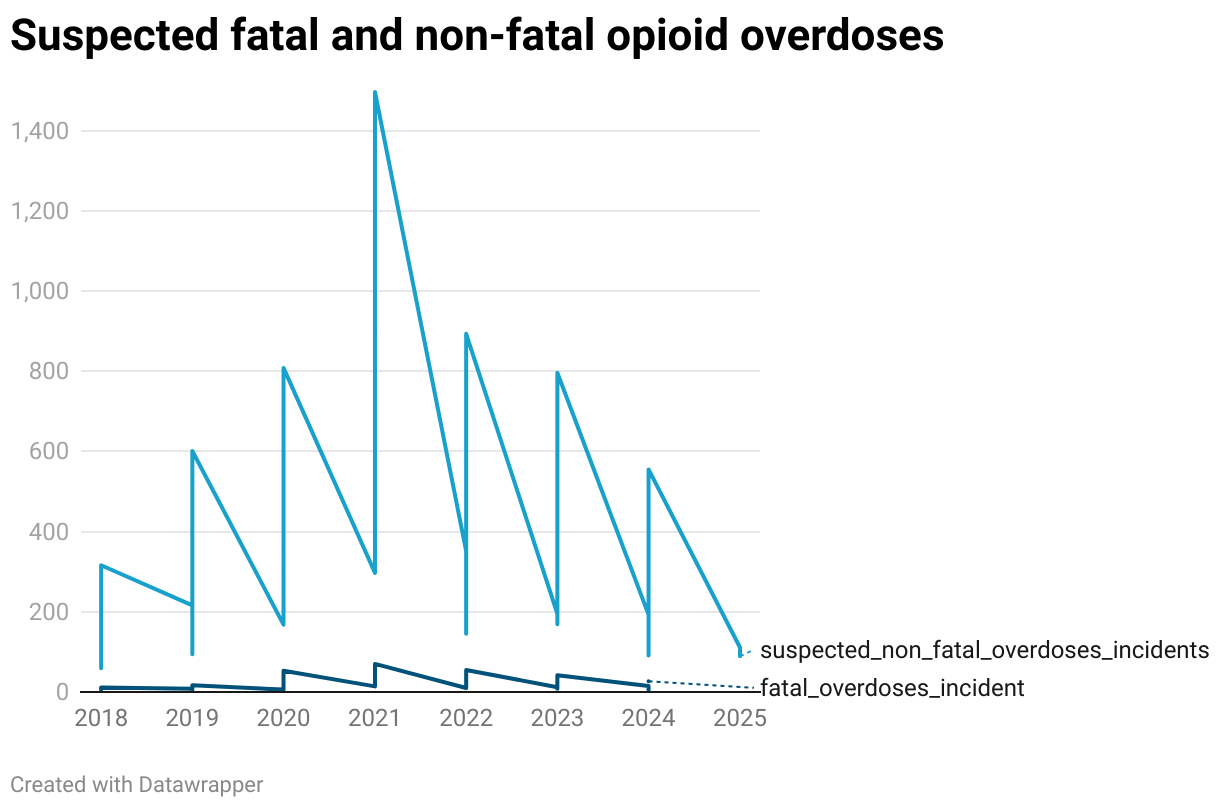
What this data shows is that the iPHARE initiative is showing some progress in reducing the opioid crisis. However, this does not mean the crisis is at an end – far from it. So what is next for the iPHARE initiative? Five years in, does it show signs of slowing down or is it continuing its momentum? This report seeks to find an answer to that.