During a particularly difficult time in my life, I chose to read a self-help book for the first time. I had heard of Meditations by the Roman emperor Marcus Aurelius, and being a love of all things literature, I decided to give it a try. The book did not make sense of the suffering I was undergoing, but it framed it differently – how I could train my mind to come to terms with it.
That was some time ago, and now that time is past, I decided to read more by Richard Wagamese, who was an Indigenous Canadian writer. I had already read Indian Horse, which shocked me to my core. I picked a book randomly, called One story, one song and read it.
One story, one song is like Meditations, but more personal and more accessible. I suppose a writer in the 21st century can share more insight than one that lived 2,000 years ago.
Wagamese in his book describes his life’s journey using a collection of short stories. He doesn’t shy away from writing about his darkest times – growing up without a family, and getting adopted by an abusive family, drug abuse and failed marriages. I have never been interested in autobiographies, but this was different.
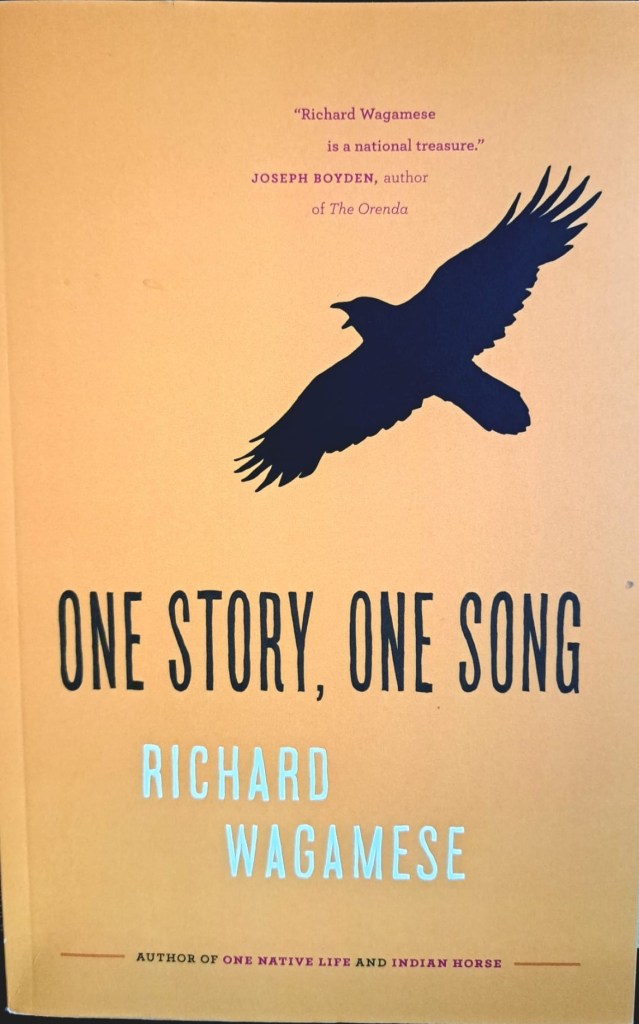
Wagamese is not afraid to show his vulnerabilities and his weaknesses. He speaks about every aspect of his life and he never makes any excuses for his actions. It was all a part of growing up, and the stories often show that he was still in the process of learning life one day at a time.
The book also delves into Ojibway teachings, and Wagamese’s own experiences as a person of Ojibway heritage. As an outsider to Ojibway teachings, this was a door into understanding the complexities of Indigenous culture and the trials and tribulations that people like Wagamese faced.
But the book does not come off as being preachy, or “holier-than-thou.” This is all a testament to Wagamese’s writing, where he speaks about his experience and how he overcame the challenges that came his way. Some challenges he overcame by himself, for others, he had help. Whether it was a friend of his, or his wife Deb, Wagamese acknowledges that he had a great support base.
A story that stood out to me particularly, is when he spoke about a friend who wanted to keep his 5-year-old son occupied. This friend tore up an image of Earth from outer space from a magazine and asked his son to put it together, thinking that it will take him some time. The boy completes the puzzle in less time than he expected, and his explanation was inventive.
Also, the book is hilarious. In one story, Wagamese observes that as we age, gravity seems to act upon us more heavily, because our bodies begin to sag – our stomachs and muscles become flabby. This made me chuckle audibly, as Wagamese found a novel way to frame aging in a hilarious way.
As a teacher, I used to promote Meditations for my students who were facing issues like anxiety and nervousness. I also asked them to speak to people about their troubles. However, if I were to teach again, I feel that One story is the book that I would recommend them over Meditations.
But that’s not to say that Meditations is the lesser of the two. In my mind, Marcus Aurelius’s teachings are still valid on how to reinforce your mind and be more proactive with how you handle daily situations.
On the other hand, Wagamese simply shows us his life, and his journey. He remains humble throughout and provides all the ways he used to solve the problems he faced. It is certainly no blueprint, but a welcome sharing of insight around a fire.
One story, one song is like Meditations but more practical. It tells the reader how to process complex emotions without the need to be stoic – it is, at its core, remarkably human.


Leave a Reply